
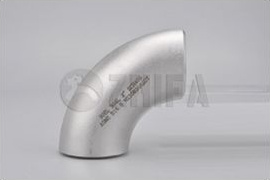
Stainless steel pipe fittings are widely used in food, beverage and pharmaceutical plants because process piping must resist corrosion while remaining cleanable. The correct product is not selected by material grade alone. Hygienic design, surface condition, joint type, traceability and the cleaning regime all affect service life and product safety.
Why stainless steel is used in hygienic piping
Austenitic stainless steels combine corrosion resistance, formability and weldability. Grade 304 or 304L can suit many mild food and beverage duties. Grade 316 or 316L is often considered when chlorides, aggressive cleaning chemicals or higher corrosion risk are present. The final grade should be selected from the actual medium, concentration, temperature, cleaning chemistry and applicable project code.
Low-carbon L grades are commonly specified for welded systems because they help limit sensitization during welding. Material selection still requires an engineering review: stainless steel is corrosion resistant, not corrosion proof.
Typical fitting and flange applications
- Elbows change direction while maintaining a smooth flow path.
- Tees divide or combine process streams.
- Reducers connect different pipe sizes and help manage velocity transitions.
- Caps provide permanent or temporary line closure.
- Flanges create removable connections around pumps, valves, instruments and equipment.
Butt-weld fittings are common where a permanent, strong and relatively smooth connection is required. Removable hygienic connections may be preferred where frequent disassembly is necessary. Conventional ASME flanges are often used on utility lines and equipment interfaces rather than at the most hygiene-sensitive product-contact points.
Cleanability and surface condition
Cleanability depends on more than a polished appearance. Engineers should consider internal roughness requirements, crevices, dead legs, weld contour, drainability and accessibility for inspection. A surface finish requirement should identify the measured parameter, the target value, which surfaces are covered and the method of verification.
After fabrication, appropriate cleaning and passivation practices may be specified to remove contamination and support formation of the chromium-rich passive layer. These treatments do not correct poor weld geometry, embedded defects or an unsuitable material grade.
Information to include in a purchase specification
A clear inquiry should state the fitting or flange type, nominal size, wall schedule or thickness, material grade, dimensional standard, pressure class where applicable, end preparation and required surface finish. It should also identify the product medium, design temperature, design pressure, cleaning chemicals and any documentation or inspection requirements.
For wrought austenitic stainless steel pressure fittings, ASTM A403/A403M is a commonly referenced material specification. It covers pressure-piping fittings and includes requirements relating to manufacture, heat treatment, chemistry, mechanical properties and examination. Dimensional requirements may come from standards such as ASME B16.9 or an agreed hygienic specification.
Documentation and quality checks
Procurement teams should define the required material certificate, heat-number traceability and inspection scope before production. Useful checks can include material identification, dimensional inspection, visual examination, surface verification and weld-related nondestructive examination when specified.
The best hygienic piping result comes from matching the material, fitting geometry, fabrication method and cleaning process. Send the complete service conditions with your inquiry so the manufacturer can review the product route and inspection plan before quotation.